Sounds that cling: situated experiences of the sound phenomena of a coastal territory
DOI:
https://doi.org/10.62410/3xj35b52Keywords:
Ecological perspective, Sound phenomena, Located experiences, Inhabiting, TerritoryAbstract
This reflection is rooted in a research-creation project on the northern coast of France. This project explores the habitability of the world and is organized through collaborative residencies between artists, researchers, local partners, and residents. It is within this framework that a sound artist meets a social science researcher. The intertwining of their on-site perspectives reveals a plurality of relationships, sometimes familiar, sometimes strange, between sound perception and the environment.
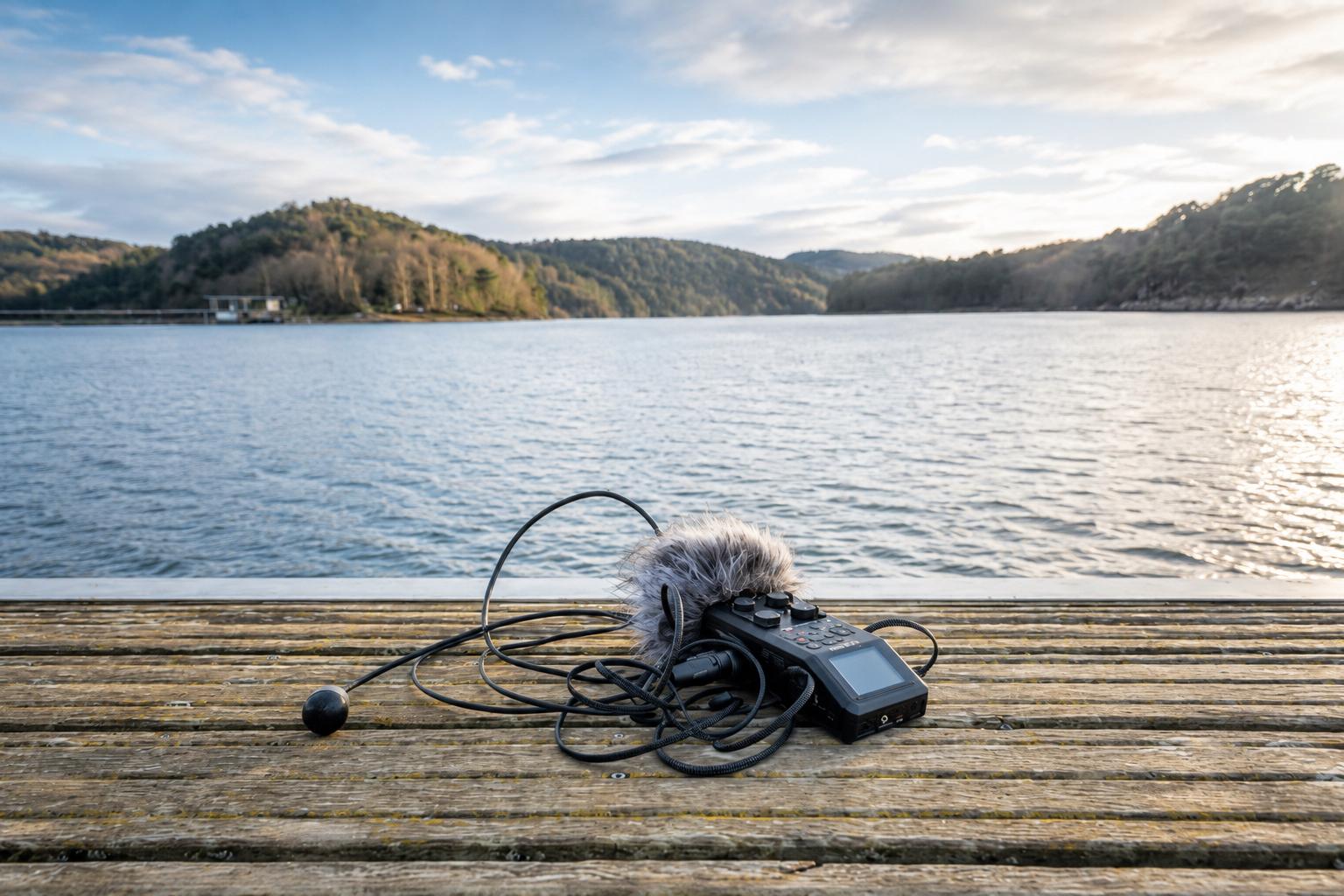
The first practices ethnography and attempts to document the soundscape of the field, microphone in hand. But his recordings only capture detached sonic snapshots. So he takes up the pen again to describe what escapes sound recording in the situations he listens to and observes, focusing in particular on the colonization of acoustic territories by the sonic styles of tourism and gentrification.
The second uses contextual recordings, drawing the material for its creation from the vast dune landscapes he explores and listens to for the project. He creates a multi-layered sound installation that recounts these landscapes by integrating the recordings into an acousmatic composition. Participants appropriate the installation by connecting it to their own experiences of the coastline and narrating them within a poetics of inhabiting.
We propose to reflect, from the interstices between the aesthetic experience opened up by musical creation and the "failures" of sound ethnography, on the ways in which sonic phenomena contribute to shaping a relation to the world. We particularly emphasize the ecology and ethics of situated experiences—in artistic practice, in ethnography, or in the familiarity of living—from which the meaning of sonic phenomena is constructed. It is in this way that the gaps and knots of research-creation allow us to grasp the recurring themes and ways of inhabiting a territory "in crisis."
Downloads
References
Alloa, Emmanuel. 2025. La résistance du sensible. Merleau-Ponty, critique de la transparence. Paris : Vrin.
Breviglieri, Marc, et Danny Trom, 2003. « Troubles et tensions en milieu urbain. Les épreuves citadines et habitantes de la ville ». Dans Les sens du public : Publics politiques, publics médiatiques. Sous la direction de Daniel Cefaï et Dominique Pasquier, 398-416. Paris : PUF/CURAPP.
Deleuze, Gille, et Félix Guattari. 1980. Mille Plateaux. Paris : Les Éditions de Minuit.
Dewey, John. 2014. L’art comme expérience. Paris : Gallimard/Folio Essai.
Fisette Jean. 2012. « Courte lecture de la notion d’icône chez Peirce ». Intellectica. Revue de l’Association pour la Recherche Cognitive (58) : 277-284.
Gibson, James Jerome. 1979. The Ecological Approach To Visual Perception. Boston : Houghton Mifflin Company.
Goffman, Erving. 1991. Les cadres de l’expérience. Paris : Éditions de Minuit.
Guillebaud Christine (éd.). 2017. Toward an Anthropology of Ambient Sound. Abingdon/New York : Routledge, 2017.
Haraway, Donna. 1988. « Situated Knowledges: The Science Question in Feminism and the Privilege of Partial Perspective », Feminist Studies, (14/3) : 575-599.
Ingold, Tim. 2011. Being Alive: Essays on mouvement: Knowledge and description. London and New York : Routledge.
Ingold, Tim. 2022. The Perception of the Environment: Essays on Livelihood, Dwelling and Skill. New edition. London : Routledge.
Jarak, Diego. 2024. « De quoi la Recherche Création n’est-elle pas le nom? ». Marges (39/2) : 136-149.
Labelle, Brandon. 2010. Acoustic Territories, Sound Culture and Everyday Life. New York : Bloomsbury Academic.
Maceron, Vanessa. 2022. Les veilleurs du vivant, Paris : La Découverte.
Merleau-Ponty, Maurice. 1945. Phénoménologie de la perception. Paris : Gallimard.
Merleau-Ponty, Maurice. 1964. L’Œil et l’Esprit, Paris : Gallimard.
Pecqueux, Anthony. 2012. « Le son des choses, les bruits de la ville ». Communications (90) : 5-16.
Quéré, Louis. 2006. « Entre fait et sens, la dualité de l’événement ». Réseaux (139) : 183-218.
Rancière, Jacques. 2000. Le partage du sensible. Esthétique et politique, Paris : La fabrique.
Schwarz, Ori. 2015. « The Sound of Stigmatization: Sonic Habitus, Sonic Styles, and Boundary Work in an Urban Slum », American Journal of Sociology (121/1) : 205-242.
Schafer, Murray. 1979. Le Paysage sonore. Toute l’histoire de notre environnement sonore à travers les âges. Paris : Éditions Jean-Claude Lattès.
Solomos, Makis. 2018. « L’écoute musicale comme construction du commun ». Circuit, (28/3) : 53-64. https://doi.org/10.7202/1055194ar
Voilmy, Dimitri. 2009. « Présentation du dossier “Ethnographier les phénomènes sonores” ». ethnographiques.org (19) [en ligne]. https://www.ethnographiques.org/2009/Voilmy (consulté le 17 décembre 2025)
Voilmy, Dimitri et Jean-Christophe Sevin (éd.). 2009. ethnographiques.org (19) [en ligne]. Ethnographier les phénomènes sonores. https://www.ethnographiques.org/2009/numero-19 (consulté le 17 décembre 2025)
Volcler, Juliette. 2022. L’orchestration du quotidien. Paris : La découverte.
Weeks (Peter). 2002. « Performative error-correction in music: A problem of ethnomethodological description ». Human Studies (25) : 359-385.
Downloads
Published
Issue
Section
Categories
License
Copyright (c) 2026 François Debruyne, Rodolphe Collange

This work is licensed under a Creative Commons Attribution 4.0 International License.